
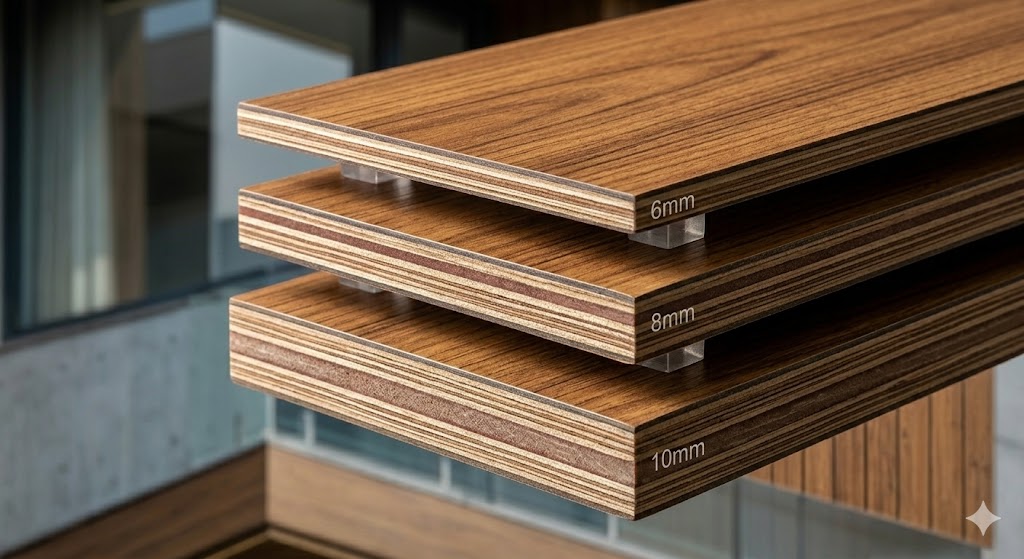
Exterior cladding karte waqt sabse important decision hota hai — kaunsi HPL sheet thickness choose kare?
Market me 6mm, 8mm aur 10mm options available hote hain. Lekin har thickness har project ke liye suitable nahi hoti.
Is detailed expert guide me hum clear karenge:
- 6mm vs 8mm vs 10mm difference
- Kaunsi thickness residential ke liye best hai
- Commercial building me kya use kare
- Wind load aur climate impact
- Long-term durability comparison
Agar aap serious exterior project plan kar rahe hain, toh yeh guide aapka confusion clear karega.
HPL Sheet Thickness Ka Exterior Me Kya Role Hota Hai?
Thickness directly impact karta hai:
- Structural strength
- Wind resistance
- Installation stability
- Long-term durability
- Cost per sq.ft
Thinner sheet sasti hoti hai, lekin har jagah suitable nahi hoti. Isi liye best HPL sheet thickness for exterior project type par depend karta hai.
6mm HPL Sheet – Kab Use Kare?
6mm sheets generally light facade areas ke liye suitable hoti hain.
Ideal For:
- Small residential elevations
- Low height buildings
- Budget projects
Pros:
- Lightweight
- Lower cost
- Easy handling
Cons:
- High wind pressure areas me recommend nahi
- Large commercial facade ke liye limited strength
Agar project simple hai aur wind exposure kam hai, toh 6mm workable option ho sakta hai.
8mm HPL Sheet – Most Recommended Thickness
India me sabse zyada demand 8mm exterior HPL sheets ki hoti hai.
Ideal For:
- Residential homes
- Villas
- Mid-rise buildings
- Standard commercial shops
Pros:
- Strong structural stability
- Balanced pricing
- Better wind resistance
- Long-term durability
8mm ko usually best HPL sheet thickness for exterior residential projects mana jata hai.
Agar aap latest 8mm exterior collection explore karna chahte hain toh visit kare:
Yaha specially exterior-grade sheets available hain jo Indian climate conditions ke liye suitable hain.
10mm HPL Sheet – Heavy Duty Option
10mm sheets high strength application ke liye design ki jati hain.
Ideal For:
- High-rise commercial buildings
- Corporate offices
- Large facade panels
- High wind zones
Pros:
- Maximum rigidity
- Better impact resistance
- Premium heavy-duty feel
Cons:
- Higher cost
- Slightly heavy installation
Agar building coastal area me hai ya wind pressure high hai, toh 10mm safe option ho sakta hai.
Indian Climate Me Kaunsi Thickness Safe Hai?
India me major challenges hote hain:
- Strong sunlight
- Heavy monsoon
- Dust storms
- Coastal humidity
In conditions me:
- 6mm safe hai sirf low exposure areas me
- 8mm most practical choice hai
- 10mm high-risk zones ke liye better hai
Professional installer bhi usually 8mm recommend karte hain majority projects me.
Thickness Ka Price Par Kya Impact Hota Hai?
Average pricing trend (approx range):
- 6mm – Lower range
- 8mm – Mid range
- 10mm – Premium range
Thickness increase hone se raw material usage badhta hai, isliye cost bhi increase hoti hai. Lekin long-term durability consider kare toh thicker sheet better ROI de sakti hai.
Installation Angle Se Thickness Selection
Thicker sheet ka matlab:
- Better screw grip
- Less vibration
- More stable facade
Agar building height zyada hai, toh thickness compromise nahi karni chahiye.
Experts Ka Practical Suggestion
Agar aap confuse ho toh simple formula follow kare:
- Ground + 1 ya 2 floor home → 8mm
- High-rise commercial → 10mm
- Decorative light use → 6mm
Majority Indian residential projects ke liye 8mm exterior HPL sheets safe aur balanced choice hai.
Updated collection aur technical details ke liye check kare:
Final Conclusion
Best HPL sheet thickness for exterior depend karta hai:
✔ Building height
✔ Wind load
✔ Budget
✔ Climate zone
✔ Project type
Lekin practical level par dekha jaye toh 8mm thickness India ke 70% exterior projects ke liye ideal hai.
Thoda sa extra invest karna long-term facade safety ke liye smarter decision hota hai.