
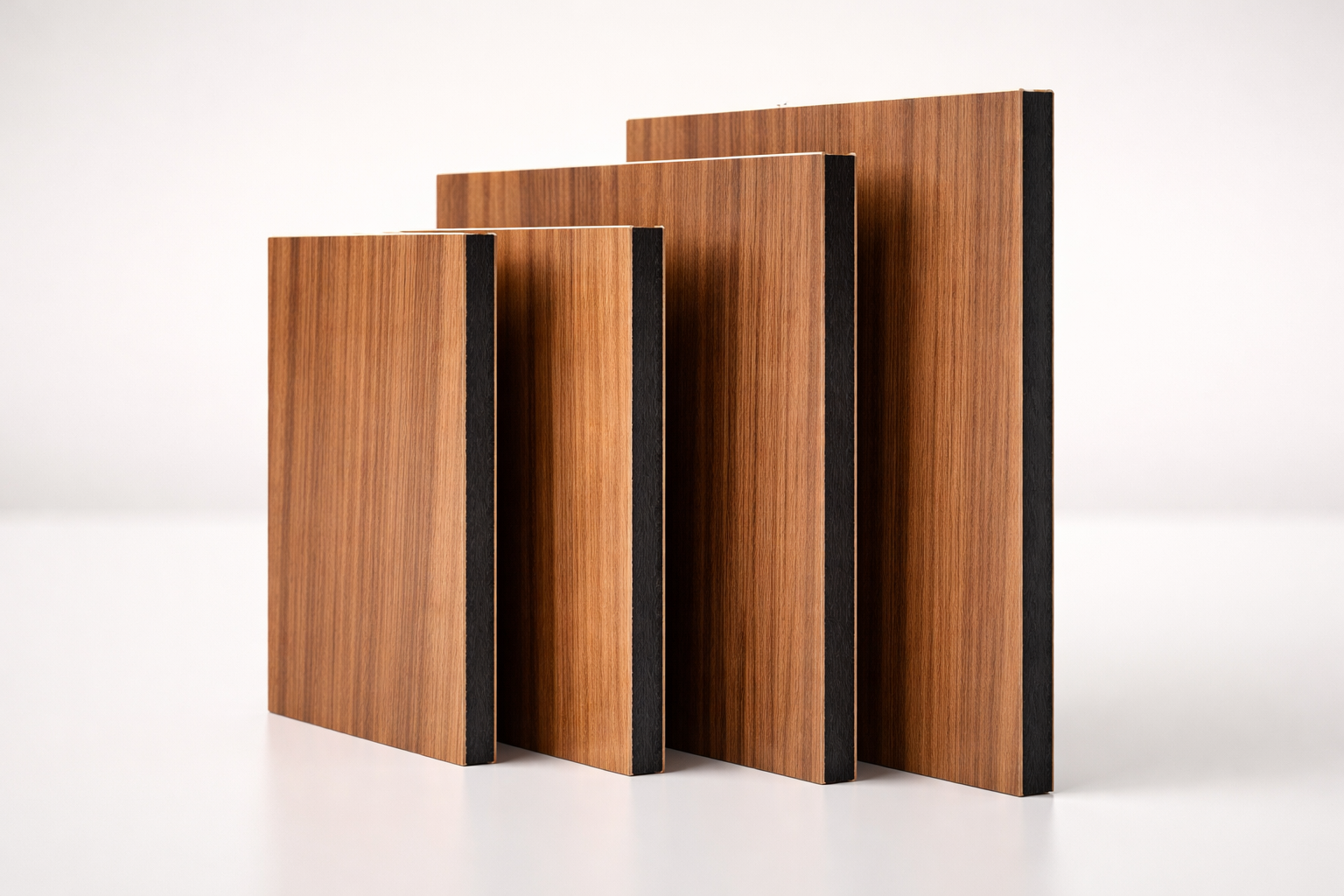
One of the most common questions people ask when buying HPL sheets is about thickness. Walk into any HPL showroom or browse any manufacturer’s catalogue and you will see options ranging from 3mm all the way up to 12mm or more. For someone buying HPL for the first time, this range can be confusing.
Getting the thickness wrong is not just a minor inconvenience — it can affect the durability, appearance, and structural performance of your installation. This guide explains exactly what each thickness range is designed for so you can make the right decision from the start.
Why Thickness Matters
HPL sheet thickness affects several important performance characteristics. Thicker sheets are more rigid, meaning they can span wider gaps in the subframe without flexing. They are heavier and more impact resistant. They have better thermal and acoustic insulation properties. And they feel more substantial — which matters both for installation confidence and for the final perception of quality.
Thinner sheets are lighter, easier to cut and handle, more flexible for curved or shaped installations, and less expensive. They work well for applications where the subframe provides close support and where extreme rigidity is not required.
3mm to 4mm — Interior Applications
HPL sheets in the 3mm to 4mm range are designed primarily for interior use. They are commonly used for wall paneling in offices, hotels, and retail environments, furniture surfacing on cabinets and shelving, kitchen and bathroom wall cladding, and decorative feature walls in residential interiors.
At this thickness, HPL sheets are not typically recommended for exterior applications in India’s climate. They lack the rigidity needed to withstand wind loads on exterior facades, and the thinner core provides less protection against the thermal movement that occurs with large temperature swings.
6mm — The Most Popular Exterior Grade
For residential exterior applications, 6mm HPL sheets are the most widely specified and installed thickness across India. At 6mm, the sheet has sufficient rigidity for standard exterior facade applications, excellent impact resistance for building plinths and lower facade areas, and the structural integrity to perform reliably through India’s extreme weather cycles.
The 6mm thickness represents the optimal balance of performance, weight, and cost for most residential and light commercial exterior projects. HPL Maker’s most popular exterior designs are available in 6mm as standard.
8mm — Enhanced Performance for Demanding Applications
8mm HPL sheets offer enhanced rigidity and impact resistance compared to the standard 6mm grade. They are typically specified for commercial building facades where wind loads are higher, lower facade areas in high-traffic commercial environments, boundary walls and fencing applications, and any installation where a particularly premium, substantial feel is desired.
The additional thickness is also beneficial in coastal environments where wind pressure is consistently higher than in inland locations. For premium villa projects where quality is the primary consideration, many architects specify 8mm as a deliberate upgrade.
10mm and Above — Structural and Special Applications
HPL sheets of 10mm and above are used for specialist structural applications including laboratory benchtops and work surfaces, outdoor furniture and seating, heavy-duty industrial environments, and large-span facade installations where maximum rigidity is required.
For most residential and standard commercial exterior applications, 10mm is more than is necessary — but for architects designing technically demanding facades or specifying HPL for structural purposes, these heavier grades offer the performance required.
How to Choose the Right Thickness for Your Project
The simplest guide is this — for interior walls and furniture, 3mm to 4mm. For residential home exteriors and standard commercial facades, 6mm. For premium residential projects, high-traffic commercial buildings, or coastal locations, 8mm. For structural or heavy-duty applications, 10mm and above.
If you are unsure which thickness is right for your specific project, HPL Maker’s technical team can advise based on your building type, location, facade dimensions, and budget. Getting this decision right at the specification stage ensures your installation performs exactly as expected for the full warranty period.