
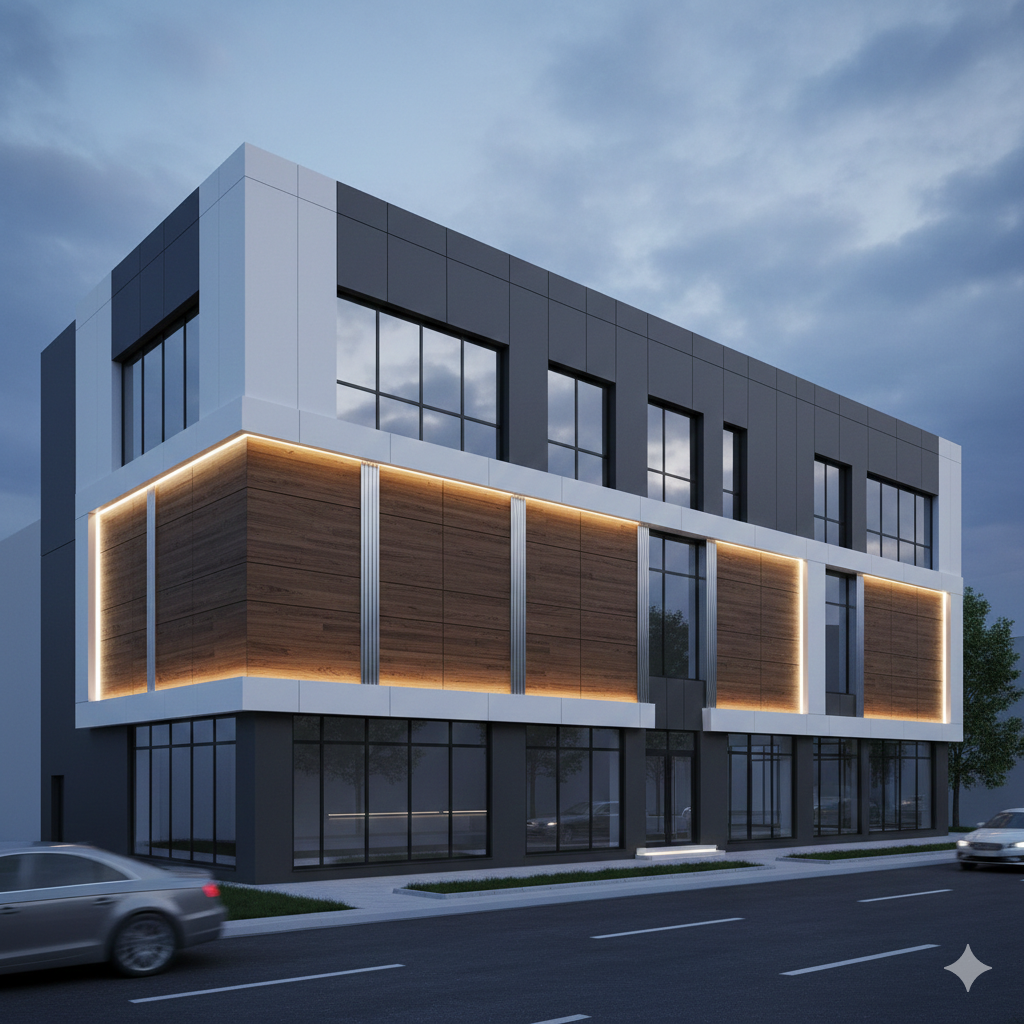
If you have been researching exterior cladding options for your home or building, you have almost certainly come across two names repeatedly — HPL sheets and ACP sheets. Both are popular, both look great in brochures, and both are widely used across Indian construction projects. But they are very different products, and choosing the wrong one can cost you dearly in the long run.
Let’s do an honest, side-by-side comparison so you can make a truly informed decision.
What Is ACP Sheet?
ACP stands for Aluminium Composite Panel. It consists of two thin aluminium sheets bonded to a core material — which is typically either polyethylene plastic or a mineral-based compound. ACP sheets became popular in India in the early 2000s because they were lightweight, affordable, and easy to install. You will still see them on many commercial buildings, signboards, and shop fronts across the country.
What Is HPL Sheet?
HPL stands for High Pressure Laminate. It is made by compressing multiple layers of resin-impregnated paper under extremely high heat and pressure. The result is a dense, hard, and highly durable panel that is specifically engineered for exterior applications. Unlike ACP, HPL is entirely non-metallic, which gives it distinct advantages in terms of weather resistance and safety.
The Safety Question Nobody Talks About Enough
This is perhaps the most important difference between the two materials, and yet it rarely comes up in casual conversations at hardware stores.
Standard ACP sheets with a polyethylene core are highly combustible. Several high-profile building fires in India and around the world — including the tragic Grenfell Tower fire in London — were made significantly worse because of ACP cladding with plastic cores. The fire spread rapidly across the building exterior due to the flammable material inside the panels.
HPL sheets, on the other hand, are inherently fire-resistant. They do not contribute to flame spread and are classified as low fire-hazard materials. For anyone building or renovating a home, school, hospital, or commercial property — this difference alone should be a decisive factor.
Durability in Indian Weather Conditions
India is not a gentle country when it comes to weather. Summers in Rajasthan and Madhya Pradesh bring temperatures above 45 degrees Celsius. Monsoons in Mumbai and Kerala bring relentless rain for months. Coastal cities deal with salt-laden air that corrodes metal rapidly.
ACP sheets, being aluminium-based, are susceptible to corrosion over time — especially in coastal or high-humidity environments. The bonding between the aluminium skin and the core can also weaken with repeated temperature fluctuations, leading to delamination.
HPL sheets handle all of these conditions effortlessly. They are non-metallic, so corrosion is not a concern. They are waterproof, UV-stabilized, and dimensionally stable — meaning they do not expand, contract, or warp with changing temperatures. An HPL exterior looks exactly the same after ten monsoons as it did when first installed.
Appearance and Design Options
Both ACP and HPL sheets come in a wide range of colors and finishes. However, HPL offers a much richer variety of natural textures — realistic wood grains, stone patterns, concrete looks, and abstract designs that genuinely elevate the visual appeal of a building.
ACP sheets tend to have a more metallic, commercial appearance. They work well for signage and commercial fascias, but for residential exteriors where warmth and character matter, HPL almost always wins on aesthetics.
Cost Comparison
ACP sheets are generally cheaper upfront. This is their main selling point and why they are still widely used. However, when you factor in replacement costs, maintenance, and the risk of fire-related damage, HPL sheets offer significantly better value over a 10 to 20 year period.
Think of it this way — paying a bit more now for HPL means you will not be spending money on repairs, repainting, or replacement down the line. A quality HPL sheet from HPL Maker comes with a 25-year warranty. No ACP manufacturer in India offers that kind of commitment.
Which One Should You Choose?
For commercial signboards and temporary structures — ACP may work fine.
For your home exterior, a residential building, school, hospital, or any permanent structure where safety, durability, and long-term value matter — HPL sheet is the clear winner.
Your home deserves better than a compromise. Choose a material that protects your investment, keeps your family safe, and keeps your building looking beautiful for decades.
HPL Maker offers a wide range of exterior HPL sheets with customized design options, professional installation support, and a warranty that no other company in India can match. Get in touch today for a free consultation.