
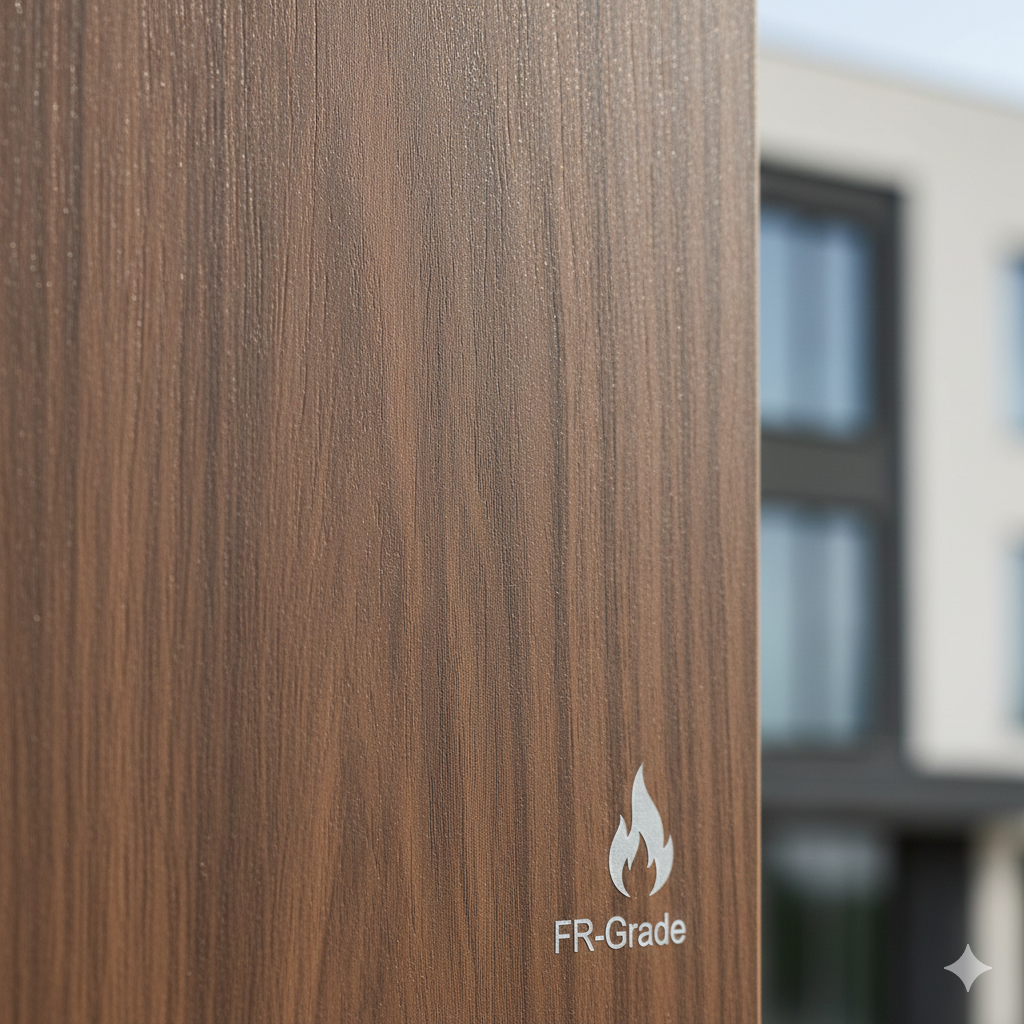
When designing modern building exteriors, safety is no longer optional — it’s essential. Along with aesthetics and durability, fire performance has become a key consideration in façade materials.
This is why fire-resistant HPL sheets are increasingly being preferred for exterior cladding across commercial and high-rise projects.
But are they truly safe for exterior use? Let’s understand.
What Are Fire-Resistant HPL Sheets?
Fire-resistant HPL (High-Pressure Laminate) sheets are compact exterior panels manufactured under high pressure and temperature using kraft papers infused with thermosetting resins.
In FR-grade variants, special fire-retardant properties are incorporated during the manufacturing process to improve flame resistance and reduce smoke emission.
The result is a robust exterior cladding material that balances safety, durability, and modern design.
How Fire-Resistant HPL Sheets Improve Exterior Safety
It’s important to clarify — fire-resistant does not mean fireproof.
However, FR HPL sheets are engineered to:
- Slow down flame spread
- Reduce heat release
- Limit smoke development
- Maintain structural stability longer during fire exposure
In real-world scenarios, this delay can significantly enhance evacuation time and minimize structural damage.
Why Fire Safety Matters in Exterior Cladding
Exterior façades are exposed to multiple environmental risks. In densely populated urban areas and commercial buildings, choosing materials with better fire performance is a responsible decision.
Today, many architects and builders prefer sourcing from experienced manufacturers like hplsheets.com, a brand known for producing exterior-grade HPL sheets that combine durability with safety-focused engineering.
By choosing panels manufactured with strict quality control, project stakeholders ensure both compliance and long-term reliability.
Key Benefits of Fire-Resistant HPL Sheets for Exterior Use
1. Enhanced Fire Performance
Designed to reduce flame spread and improve overall building safety.
2. Weather Resistance
Built to withstand harsh sunlight, heavy rainfall, humidity, and temperature fluctuations — ideal for Indian climate conditions.
3. Long Service Life
Exterior-grade HPL sheets typically offer 15–25 years of performance with minimal maintenance.
4. Structural Strength
Highly impact-resistant and stable under varying environmental conditions.
5. Modern Aesthetic Options
Available in wood finishes, solid colors, stone textures, and custom designs — allowing designers to achieve premium façade looks without compromising safety.
Fire-Resistant HPL vs Standard HPL Sheets
| Feature | Standard HPL | Fire-Resistant HPL |
|---|---|---|
| Flame Spread | Moderate | Reduced |
| Smoke Emission | Standard | Lower |
| Exterior Suitability | Yes | Yes (Safer Option) |
| Compliance Support | Basic | Enhanced |
For projects with stricter safety norms, FR-grade HPL sheets provide added confidence.
Choosing the Right Manufacturer Matters
Fire performance depends not only on material type but also on manufacturing quality.
When selecting fire-resistant HPL sheets, always check:
- Certification and testing standards
- Manufacturing process quality
- Exterior-grade specifications
- Consistency in thickness and density
Established manufacturers such as hplsheets.com focus on precision production standards to ensure that exterior panels meet both safety and durability expectations.
Final Verdict
Yes, fire-resistant HPL sheets are safe for exterior use — provided they are sourced from a reliable manufacturer and meet industry safety benchmarks.
They offer a practical balance between safety, durability, and modern design — making them a preferred choice for commercial façades, institutional buildings, and high-rise developments.
In today’s construction landscape, selecting the right cladding material is not just about appearance — it’s about building responsibly.